Posts Tagged ‘Toxicoscordion’
First Trip of the Year to Bearbones Mountain
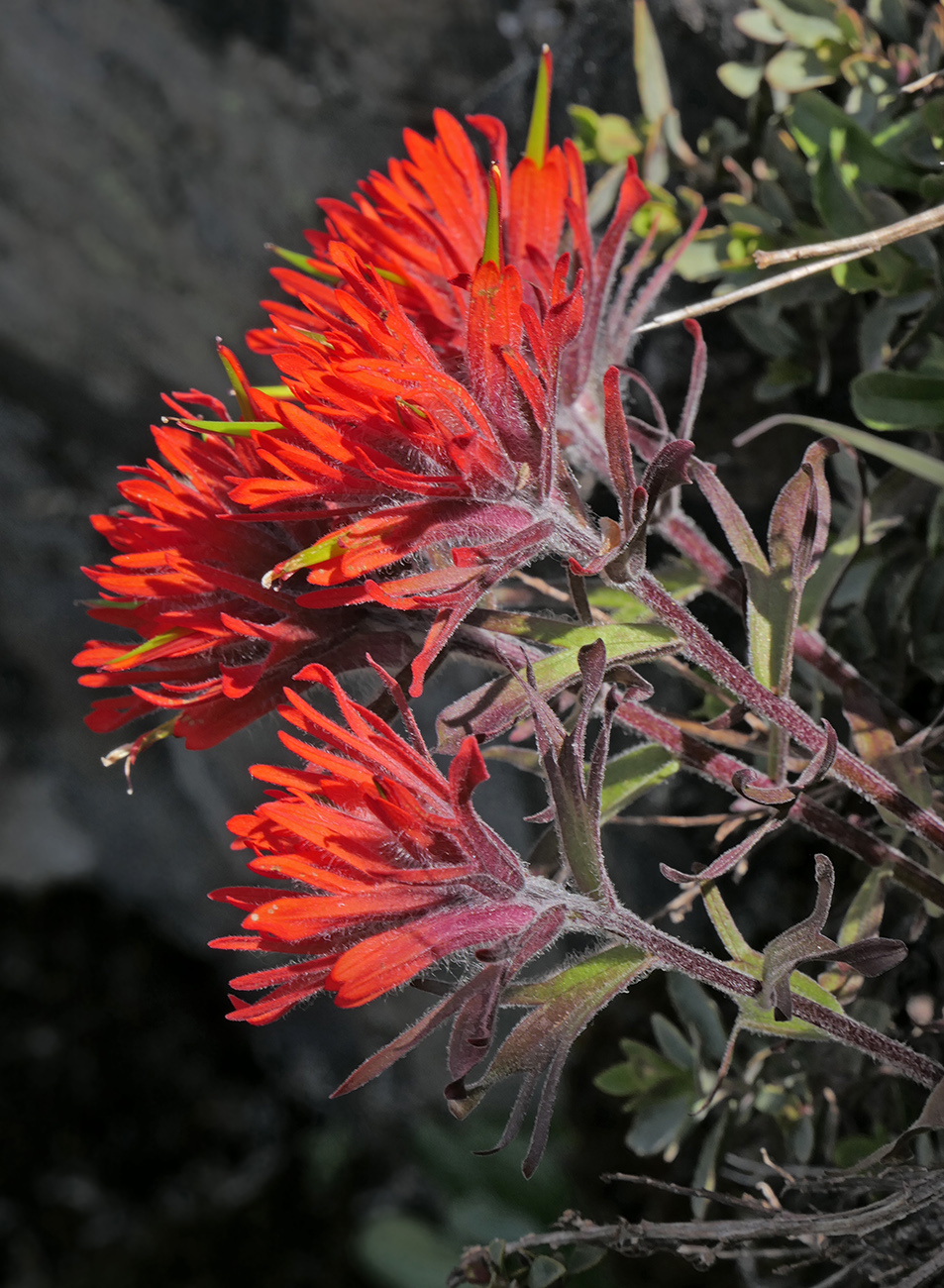
I was able to get close to some beautiful cliff paintbrush (Castilleja rupicola) on my way up the north side of the summit. Most of the other plants I saw were out of reach.
I recently heard from Chad Sageser that he had cleared the roads (2127 and 5850) to Bearbones Mountain of fallen trees. What a hero! With all the interesting early plants on this old lookout site, I decided to head up there as soon as possible. On May 31, I drove up there by myself. I’d missed the earliest flowers—only a couple of glacier lilies (Erythronium grandiflorum) were still blooming—but the rest of the flowers were beautiful, and there was more spring phacelia (Phacelia verna) than I’d ever seen before. I was a bit tired, so I didn’t make it as far down the side ridge as I usually go. I also wanted to save a little energy for a quick but steep trip up to the top of Big Pine Opening (the big open slope along Road 21 at the intersection of Rd 2135) at the end of the day. This is the lowest site of purple milkweed (Asclepias cordifolia) we know of in the Middle Fork district, so I wanted to see how far along the bloom was. Here are some highlights.
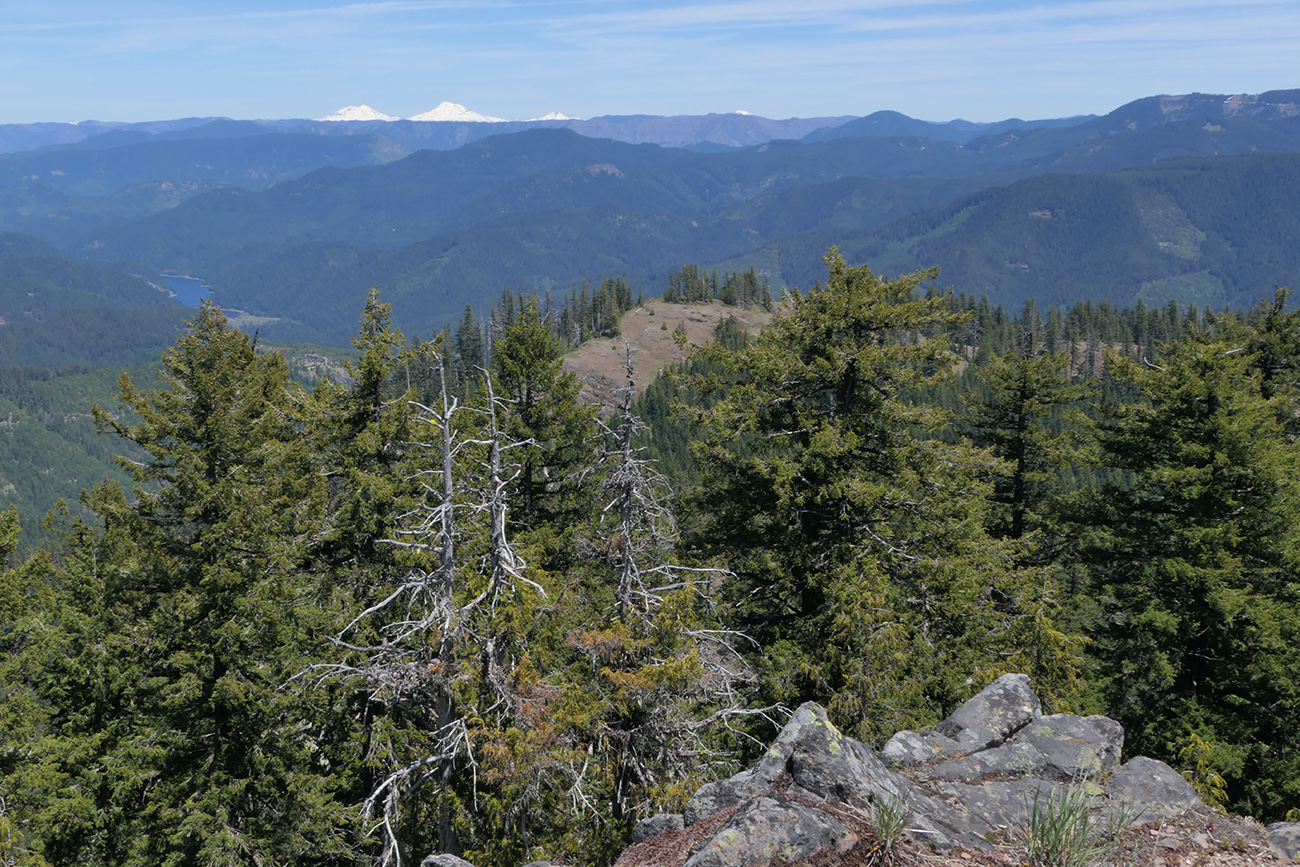
Looking to the northeast from the summit, you can see the snowy Three Sisters in the distance. You can also see the extensive damage of the 2022 Cedar Creek Fire, which burned from Waldo Lake all the way to west of Blair Lake. The nearby ridge I named Bearscat Ridge, but I haven’t been back up there since 2007.
A Rainbow of Colors at Cone Peak and Iron Mountain

The Cone Peak meadows at peak bloom. What else can you say but “Wow!”?

The ivesia (Ivesia gordonii) was in perfect bloom on the side ridge of Cone Peak. It’s also on the top of the peak, but there are no records of it anywhere else on the west side of the Cascades.
Sabine Dutoit had a hankering to go to Cone Peak and Iron Mountain, so last Thursday, June 13, Sheila Klest and I joined her for an excellent day out in the Cascades. It was a gorgeous day, and the flowers were outstanding. We walked the 6.6-mile loop trail up through the Cone Peak meadows, over to Iron Mountain (passing just a few last patches of snow on the north side), and up to the Iron Mountain summit before returning to the road. It was great to be out with good friends, enjoying the flowers and views, and not working too hard. And there weren’t the usual crowds at Iron Mountain—undoubtedly the most popular wildflower site in the Western Cascades. Although that’s much longer than I usually hike, it seemed so relaxing not studying, surveying, or collecting seeds, and not bushwhacking. I’ll have to try that more often! It was hard to choose just a few photos to post. You’ll just have to imagine the rest—or go yourself! Read the rest of this entry »
Bears Gone Wild
Perhaps I should have expected a bear-ful day yesterday (June 5), since I was going to spend the day on Bearbones Mountain. As I drove up Bearbones Mountain Road 2127 past Hills Creek Reservoir, a bear dashed across the clearcut into the woods. Seeing a bear once in a year is always exciting—last year I didn’t see any—but this makes 3 bear sightings this year, and it isn’t even summer (officially or weather-wise). A couple of more bends, another clearcut, and this time it was a lone elk. I’m glad they find something good about these hideous clearcuts. Unfortunately, there are a number of private parcels within the Willamette National Forest in this area, and they’ve been pounding them hard over the last few years, not leaving so much as a single tree standing. In fact, there’s a new one at the base of Bearbones just since my last trip there in 2008.

The aftermath of a bear’s search for Lomatium roots
When I reached the old lookout site on top of Bearbones, I noticed some bear damage along one side. As usual, they were after Lomatium hallii, evidently one of their favorite plants. The damage grew steadily worse as I headed down the wonderful side ridge. As I followed this bear hurricane along the ridge, I witnessed an increasing number of areas where the rocks were strewn about, and rootless tops of the Lomatium were lying about as evidence of their feeding frenzy. Read the rest of this entry »