Posts Tagged ‘Potentilla’
Scouting Trip to Warner and Groundhog Mountains
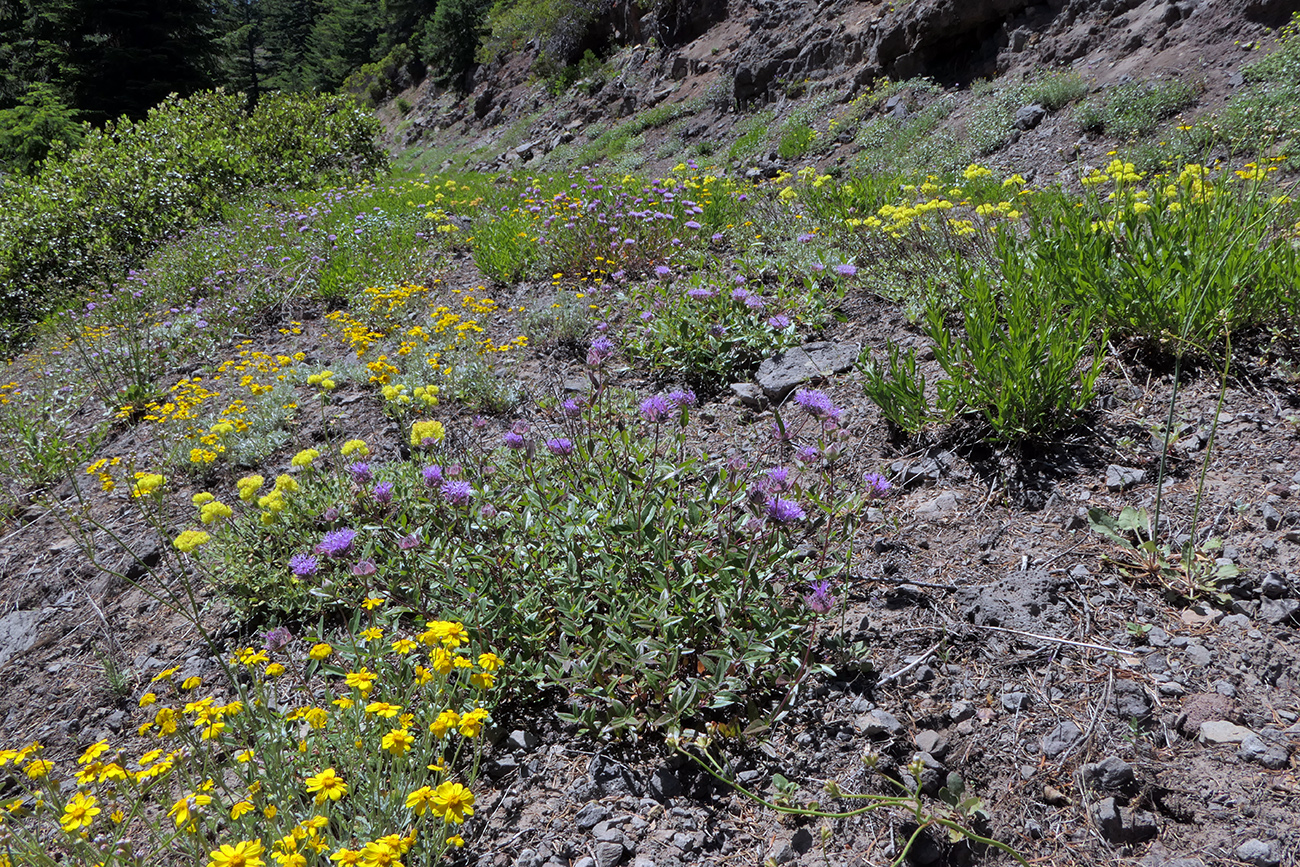
This was what I was hoping to see! The lower bank on Road 452 was awash with purple coyote mint and yellow sulphur buckwheat and Oregon sunshine. A perfect complementary color scheme.
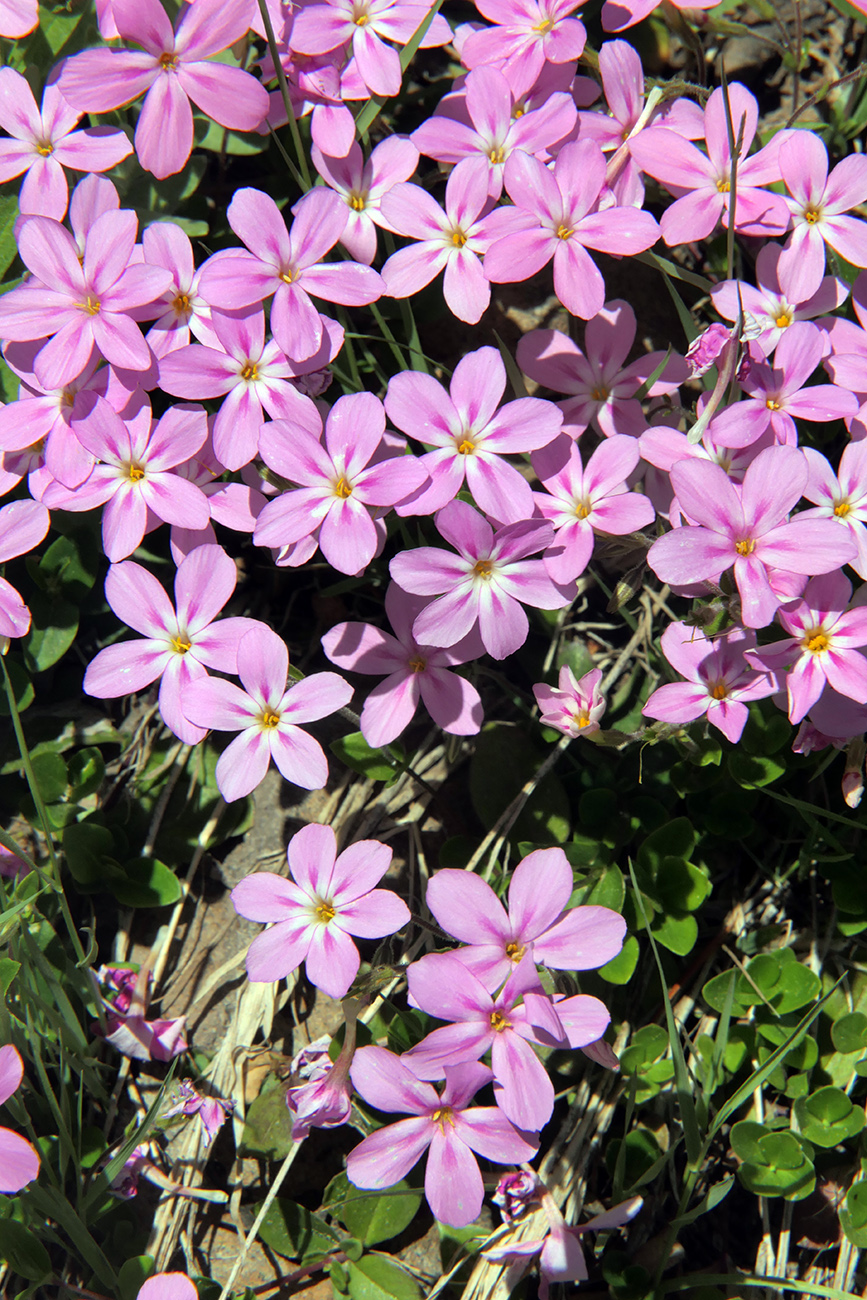
There’s one particular corner on the road between Moon Point and Warner Mountain that has a beautiful population of woodland phlox (Phlox adsurgens) growing on the roadbank.
Earlier in the year, I agreed to lead a botanizing trip for the Emerald Chapter of the Native Plant Society of Oregon sometime in the summer. I try to do one a year, but it doesn’t always happen—like last year when there were so many fires. I decided it was about time to bring people back to Groundhog Mountain. I hadn’t taken NPSO folks up there since 2008, when our chapter hosted the annual meeting. Not only is it one of my favorite botanizing (and butterfly watching) spots, it is ideal for a field trip because there are so many possible places to check out, and there will always be something blooming well. There are no trails, but there is much to see right by the road, so everyone can gather together when we find something special. The date chosen was July 12th because it was during a gap in planned activities for the group. So on July 3rd, I headed up by myself to try and figure out where I should take everyone. Having already seen how bad the section of Road 2309 was between Road 2120 and Waterdog Lake (see Another Try at Groundhog Mountain), I decided the long way around from Road 2129 past the Warner Mountain Lookout would be the easiest and safest for a caravan of vehicles. Read the rest of this entry »
Pollinators and Posies at Mistmaiden Meadow and Elk Camp

You can see the fading scintillae (metallic scales) on the hind wings of the beautiful lupine or acmon blue (very hard to tell apart!). Buckwheats are host plants for both of these species, and this female appeared to be laying eggs—curling her abdomen and pushing it into the northern buckwheat (Eriogonum compositum) inflorescence. I was unable to spot any eggs, however.

We stopped along Road 140 to look for butterflies. This has been a very reliable spot to find the gorgeous bramble hairstreak as there is a large population of their host food plant, big deervetch (Hosackia crassifolia). I was thrilled when Nancy finally spotted this fresh one.
On June 23, I made my third trip of the year to Mistmaiden Meadow, Elk Camp, and Nevergo Meadow, northwest of Oakridge. There’s just so much to see in this area between Saddleblanket and Sourgrass mountains, and none of it is too far from the road. Just wandering about rather than actually hiking is my favorite way to spend a relaxing day, part of the reason I return to this area so often. My previous trip (see Mistmaiden Meadow and Elk Camp Round 2) was 3 weeks earlier, so much had changed. This time, I was accompanied by Nancy Bray and Kate Shapiro. We had a very pleasant if uneventful day looking at plants and insects. Here are some photographic highlights. Read the rest of this entry »
NARGS Campout Day 2: Loletta Lakes

In the wetland near Loletta Lakes, Juan found a nice shady spot under some willows next to an amazing display of monkey flower (I’m not sure if this is now Erythranthe guttata or not) where he could stay cool and perhaps enjoy the display.
For the second day of our NARGS annual campout (June 20), we headed up Coal Creek Road 2133 to do some roadside botanizing. We pretty much retraced the two earlier trips John Koenig and I did several weeks earlier (see Another Exciting Day in the Calapooyas and Another Exciting Day in the Calapooyas: The Sequel). One of our usual participants, Kathy Pyle, had arrived the night before accompanied as always by her cute little dogs, Juan and Paco. We were also joined for the day by Sheila Klest, the proprietor of Trillium Gardens, a local native plant nursery. Read the rest of this entry »
Looking for Pollinators at Carpenter Mountain

The parking area is worth spending some time enjoying the flowers and the great view of the Three Sisters.

A checkerspot nectaring on bastard toadflax (Comandra umbellata)
Friday (July 22), I went to Carpenter Mountain for the first time in 5 years. It’s a long drive on gravel roads, but the trail is short, and I was really in the mood to just relax and take photos. I arrived to find the road near the parking area lined with flowers. I probably spent an hour just wandering about chasing butterflies, photographing flowers, and enjoying the terrific view. That’s really my kind of a day. There were lots of Castilleja hispida, Calochortus subalpinus, Penstemon cardwellii, Fragaria virginiana, and tons of perfectly blooming sticky cinquefoil (now Drymocallis glandulosa). I noticed some little green flags that appeared to mark some plots. Carpenter is part of the HJ Andrews Experimental Forest, so there is a lot of research going on in the area. I wondered how I would find out what the study subject was here, when, lo and behold, a young woman drove up and started checking her plots. How convenient! It turns out she’s an OSU student studying pollinators—one of my favorite subjects—and one I was sort of studying myself when she drove up. I was trying unsuccessfully to photograph a two-banded checkered skipper frequenting the strawberries—also their caterpillar host species. I find it really interesting how many host species are good nectar species as well. I later got some so-so photos of one drinking from fading Arctostaphylos nevadensis but not from the Fragaria. She was having the same trouble I have been, trying to get some work done with all this unseasonably cold and damp weather. Read the rest of this entry »