Posts Tagged ‘Actaea’
Long-awaited Return to Abbott Butte
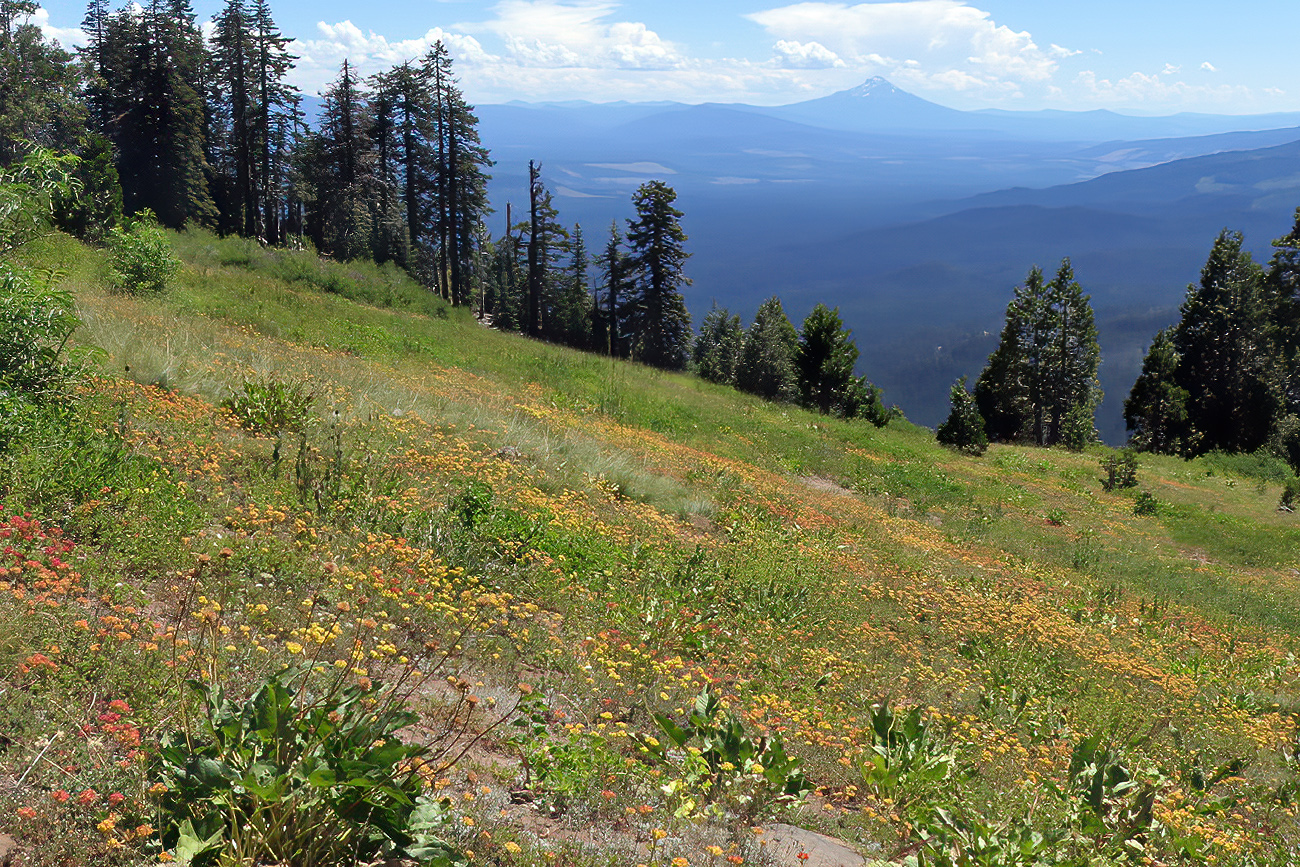
You can see Mount McLoughlin to the southeast from the summit meadow.
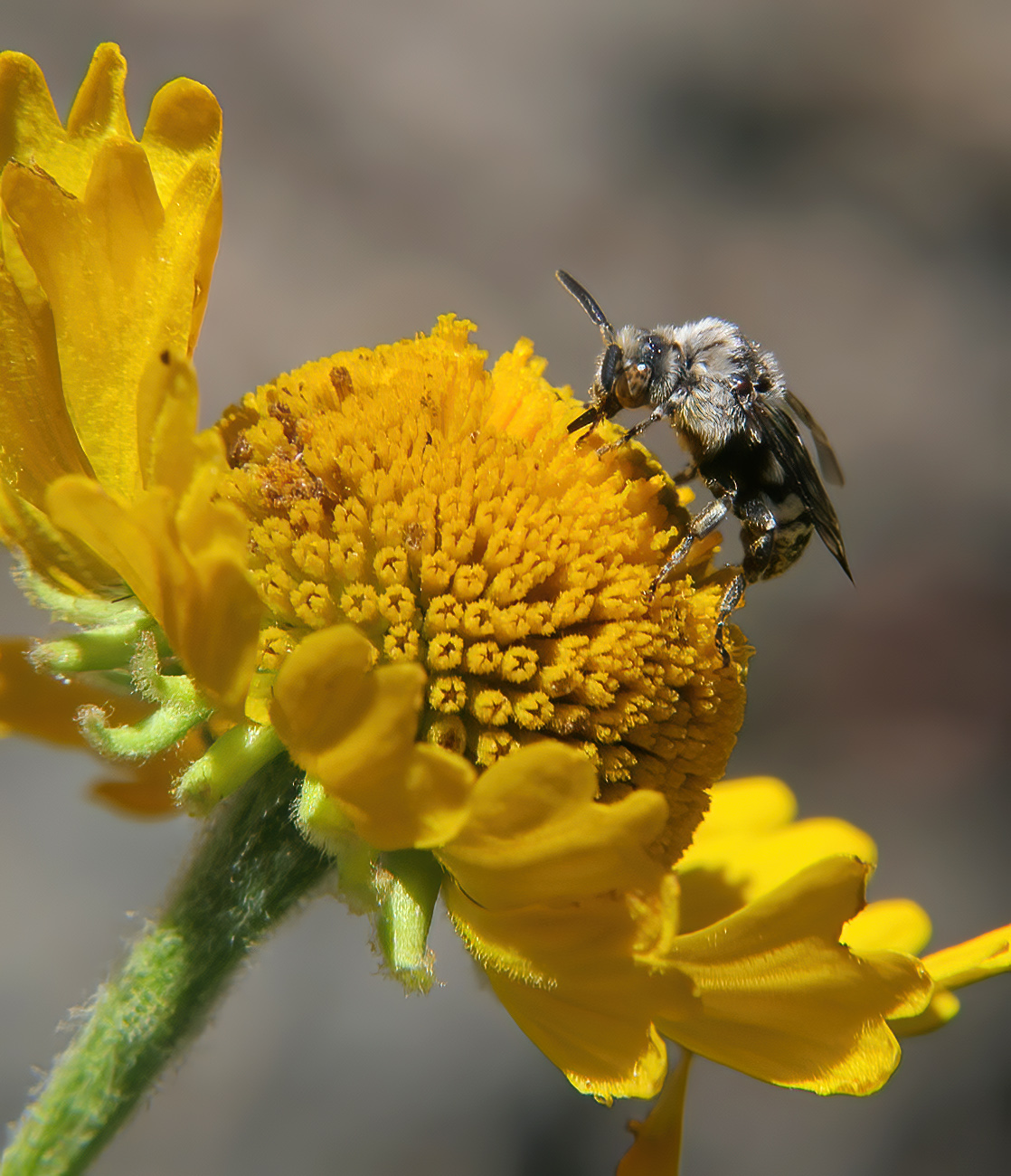
This cute bee is nectaring on tall sneezeweed (Helenium bigelovii), a southwestern Oregon species I’ve only seen in the Cascades near the Abbott Butte trailhead and at nearby Donegan Meadows.
In late June, I received an e-mail from Adam Schneider, another avid wildflower photographer, saying he was heading down to the Rogue-Umpqua Divide and did I have any suggestions for where to go. This is one of my favorite areas of the Cascades, and I used to try to get down there every year. But then I got busier with work, and every time I thought about going there was a heat wave or thunderstorms in the forecast or a nearby fire or smoke. Somehow a decade passed without a visit! Then when my old van became too untrustworthy to drive into the mountains, we got an electric vehicle. I’d been keeping an eye on charging stations, but as of summer of 2024, there still weren’t any on the east side of the Cascades that I could use to make the long trip. Adam’s e-mail prompted me to take another look, and I was thrilled to see a fast-charging station had been installed in Chemult last fall! Read the rest of this entry »
Seed Season at Grizzly Peak
With the summer almost over, earlier this week (September 16), I finally made it down to southern Oregon. After a day of plant shopping and visiting with friends from NARGS, I spent another day up on Grizzly Peak. Most of the flowers are gone, but there are plenty of seeds and other interesting things to see, and I really enjoy any chance I get to see the unusual plants that show up at the southern end of the Western Cascades.

Red baneberry (Actaea rubra) is especially common at the southern end of the Western Cascades. Its showy fruit adds a lot of color to the forest this time of year.
Last year, Kelley Leonard and I were excited to see some double-flowered Delphinium glaucum in one of the large patches near the beginning of the trail (see Double Delphiniums). It appeared they were actually creating seed, and instead of the usual three follicles per flower, there were many more. Double flowers tend to be sterile, so it would be very lucky to find fertile seeds. This time, it didn’t take me long to spot several double-flowered plants, even though there were only a few flowers left at the tops of some of the tall inflorescences. Unfortunately, the doubles are in fact sterile. They had formed clusters of follicles, but they were all shriveled up. In contrast, the normal flowers were setting copious amounts of seeds in their fully formed follicles. Even these, I’ve had trouble growing. Someone, maybe slugs, always eats the tiny seedlings of these and every other Delphinium I’ve tried to grow. But there’s always hope. A plant this beautiful is worth numerous tries to get it established in the garden. Read the rest of this entry »