Archive for the ‘Multnomah County’ Category
Long-awaited Return to McCord Creek Falls
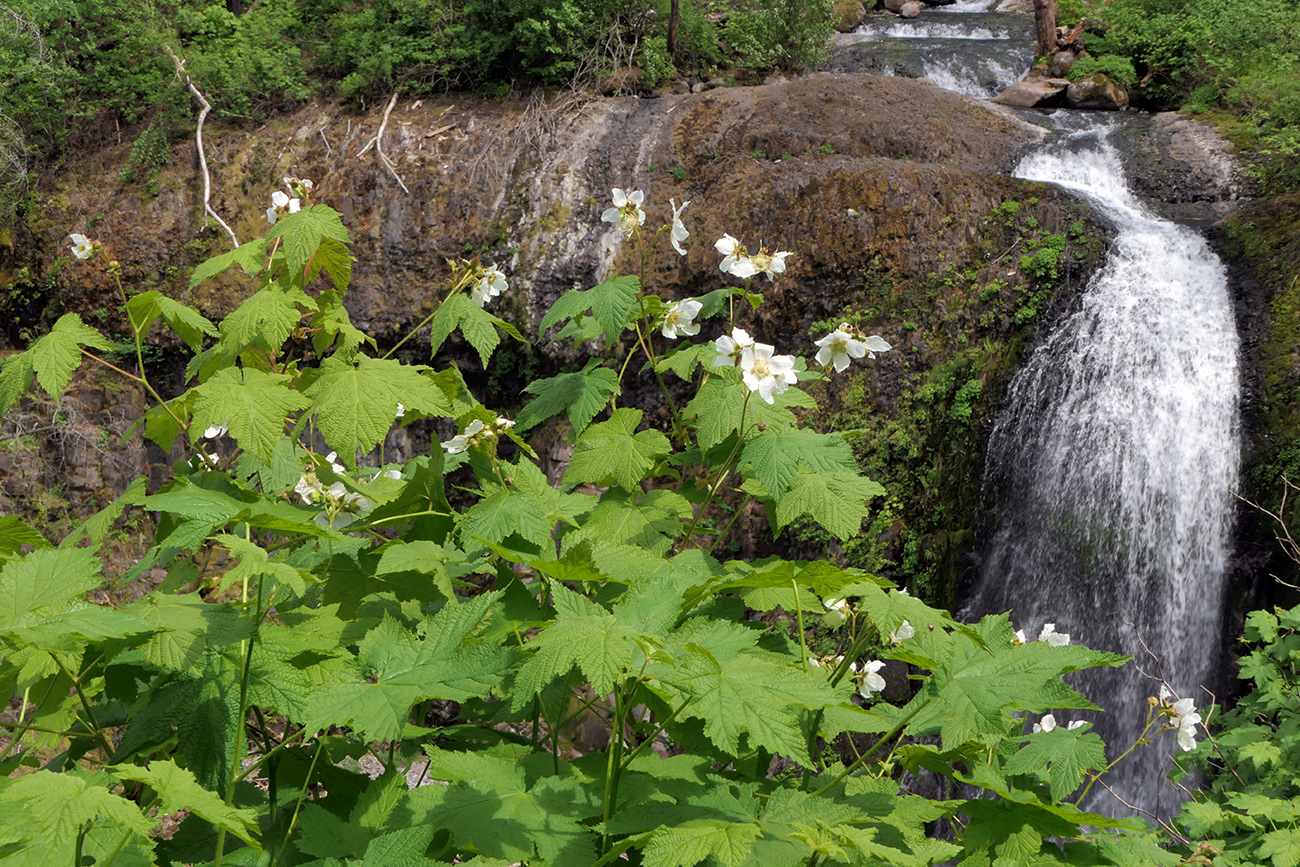
Thimbleberries blooming in front of McCord Creek Falls
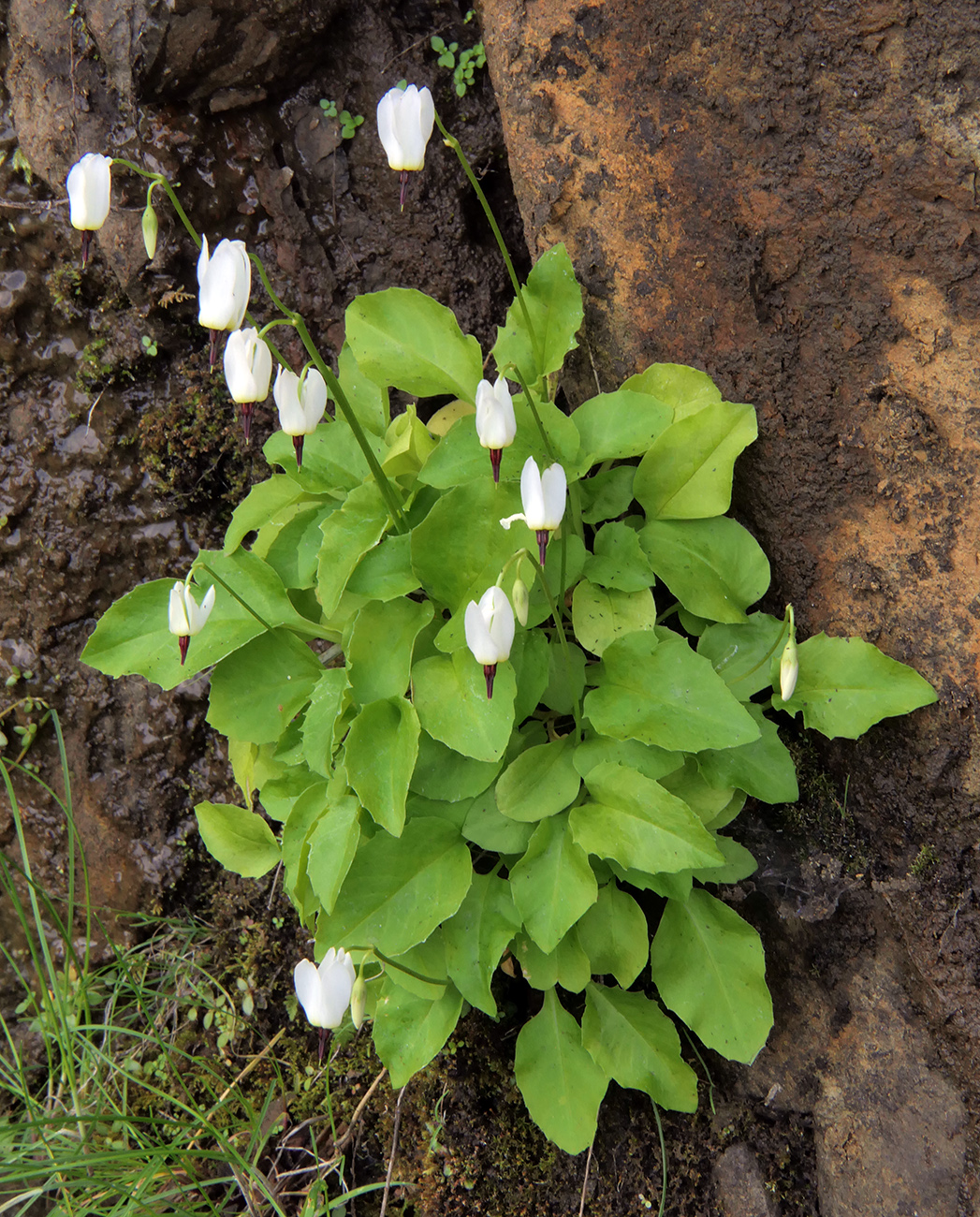
White shootingstar was in perfect bloom in the damp areas of the cliff.
My first visit to McCord Creek Falls was on a trip led by Russ Jolley, the author of the classic field guide, Wildflowers of the Columbia Gorge. It was way back in 1997, on a field trip organized by the now-defunct Emerald Chapter of the North American Rock Garden Society. I immediately fell in love with the place because part of the trail is cut into one of those amazing vertical cliffs that grace the Oregon side of the Columbia River Gorge. While I have a lot of favorites, plants that have adapted to survive the brutal conditions of life in rock crevices have to be my favorite favorites. You have to respect anything that tough. And the contrast of the colorfully flowered and delicate-looking plants with the hard and craggy rocks appeals to the artist in me. Over the next 13 years, I made the long trip north 10 more times. But somehow it just dropped off my radar. I guess I got too busy to drive all the way up there because my last trip there was in 2010 (see Late Bloom at McCord Creek Falls). Read the rest of this entry »
Late Bloom at McCord Creek Falls

Streambank arnica prefers wet areas like the spray zone of Elowah Falls.
McCord Creek Falls is a great place to get a closeup look at the plants that grow on the spectacular but normally out-of-reach cliffs along the Gorge. At such a low elevation, it blooms earlier than most sites that are in the Western Cascades, so I’ve never checked it out this late in the year. On Wednesday (July 21), I was happily surprised to find a number of things still in bloom. Late-blooming Scotch harebell (Campanula rotundifolia) is in its prime now, and the pretty and rare Gorge fleabane (Erigeron oreganus) and long-bearded hawkweed (Hieracium longiberbe) were still blooming well. Richard’s penstemon (Penstemon richardsonii) was still showing a lot of color, and the ocean spray (Holodiscus discolor) was dripping its pretty cream wands off the cliffs. In the cool, wet conditions down at Elowah Falls, streambank arnica (Arnica lanceolata, formerly amplexicaulis) and Harford’s ragwort (Packera [Senecio] bolanderi) were blooming well.

Richardson’s penstemon’s narrow, deeply toothed leaves are quite distinctive.
I saw some things I’d missed in the past and had one nice addition to my list. I finally saw the white-flowered birch-leaved spiraea (Spiraea betulifolia), and it was in flower. That’s a new plant for me. It doesn’t range very far south in Oregon. It grows in the woods right along the trail, but with all the other shrubs and its late flowering, I’d never noticed it before, although I knew from others’ lists that it was there. Some Madia gracilis was just starting on the trail along the cliff. I’d never noticed it before either.

Woodsia scopulina is noticeably hairy but otherwise might be mistaken for the common Cystopteris fragilis.
It turns out a number of the ferns on the cliff face are Rocky Mountain woodsia (Woodsia scopulina). I’m surprised I didn’t look more closely at them before. I think that perhaps because they were still in good shape when the similar but glabrous fragile fern (Cystopteris fragilis) would have been shriveling up, they were more conspicuous. It does appear that Woodsia scopulina is found at a number of Gorge sites, so it isn’t very surprising. Still, it is one of my favorite rock ferns and not very common in Oregon, so it was good to see it there. As late as it was, I was hoping to collect some seed but didn’t have much luck with the gorgeous Columbia kittentails (Synthyris stellata). I did find some Oregon bolandra (Bolandra oregana) seed though, and just a few Erigeron seeds were ripe. It is always worth checking out a spot well past “peak” flowering. You never know what you’ll find.