Very Early Trip to Groundhog Mountain Area
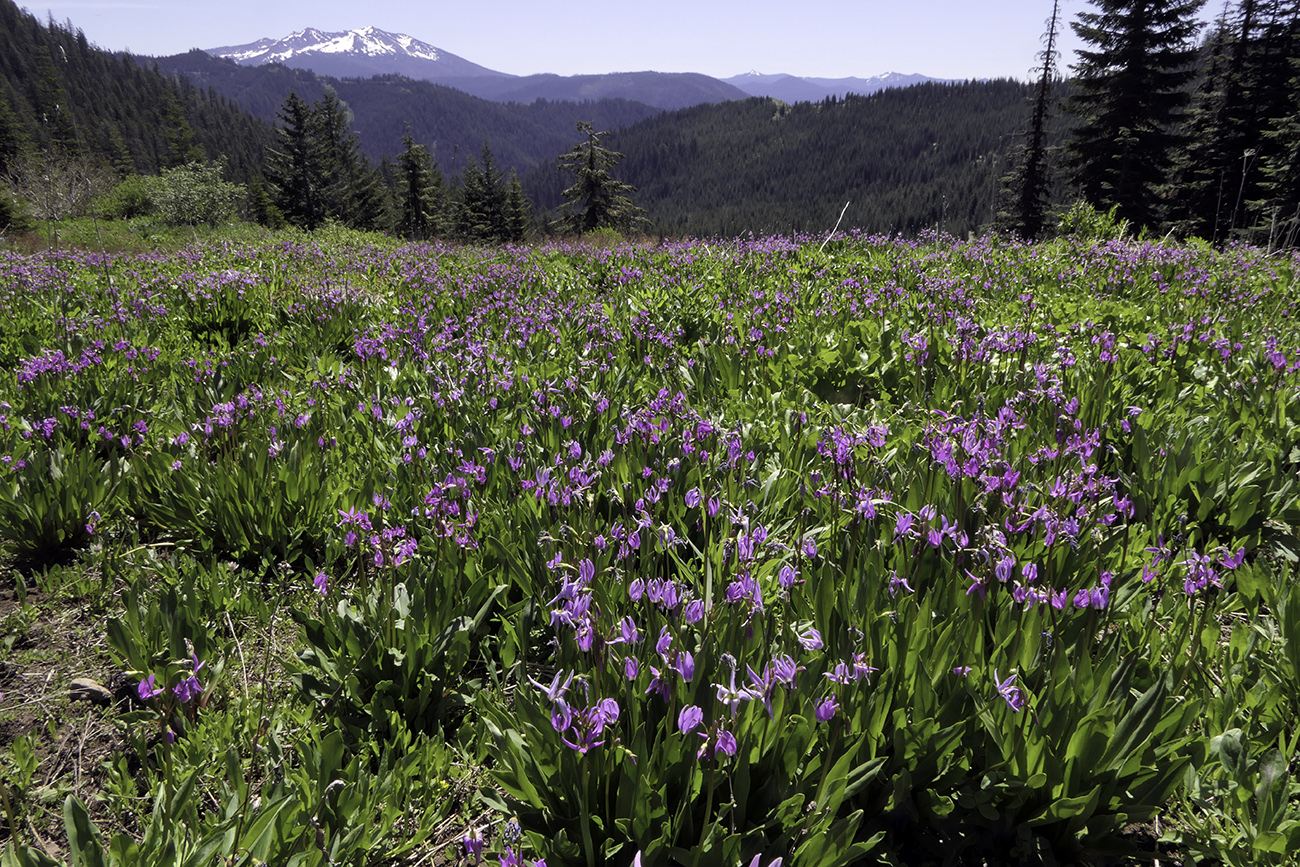
Not much snow for late May on the west side of Diamond Peak. The mountain shooting star (Dodecatheon [Primula] jeffreyi) was putting on quite a show.
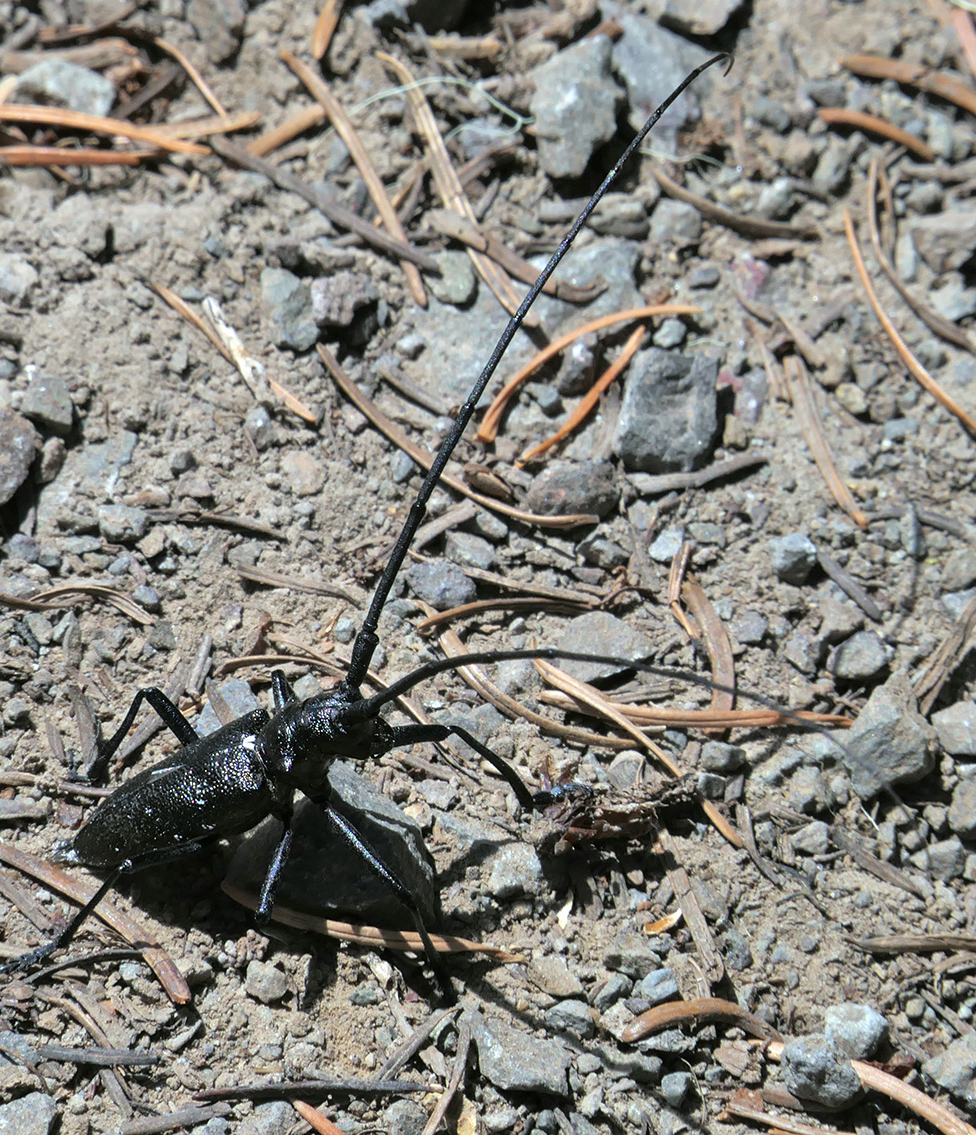
The long antennae of this large white-spotted sawyer beetle (Monochamus scutellatus) caught everyone’s eye on the road to Logger Butte. Apparently this wood-boring beetle doesn’t really bite, but it can grip hard if you’re trying to get it off you.
On May 24th, I headed up to Groundhog Mountain with Alan Butler, Dave Predeek, and Hannah English. It was only the second time I’d ever been up there in May as it is usually snowed in until at least mid-June. Dave and I had also come on May 24th way back in 2015 (see Two Foggy Outings)—after the only other winter since I moved here over 30 years ago when there was no snowpack in the Western Cascades.
We came in from the north via Road 2309 to see the roadcut flowers. It was already drying out there—with no snowpack, it is a very early year indeed. We made a number of our usual stops to Waterdog Lake, Logger Butte, Road 452, the pond just north of Logger Butte, and we also drove all the way up the west side of Groundhog to see the cliffs at the north end (in Alan’s high-clearance truck—I wouldn’t do that in my car!). Here are some highlights of a very pleasant day with other nature lovers observing flowers and insects.

The Cascade fleabane (Erigeron cascadensis) was in perfect bloom up on Logger Butte and attracting both snowberry checkerspots and different bees.

A sweat bee also enjoying the fleabane

Alan and Dave admiring the lovely display of spreading phlox (Phlox diffusa) along the banks of Road 452.

Last year at Waterdog Lake, I was unable to relocate the single plant of Crater Lake currant (Ribes erythrocarpum) I had found 2 years ago (see Peak Flowers at Groundhog Mountain). I had neglected to waypoint it on my phone when I discovered it, but I did take photos. One of them showed the lake in the background, so with that in hand, I was able to line up the view, and there was the plant! It is now waypointed, so I won’t lose it again.

The sweptback flowers of mountain shooting star are adapted for buzz pollination of bumblebees. I’m not sure if I’ve ever seen a butterfly nectaring on one before, but this Juba skipper was bouncing from one flower to the next.

One of my main goals of the day was to check on the population of smooth douglasia (now Androsace laevigata) on the cliffs below the north end of Groundhog Mountain. On their vertical perches, they are unaffected by snow, and they bloom so early that it is hard to get there early enough to see them in flower. The last time I saw them in flower was in 2015—the previous year without a snowpack. This time I was too uncomfortable to climb down for a closeup, but I could see the flowers with binoculars. And the long-zoomed photo shows about 5 pink-flowered plants (click on it for a larger view). This is the most southerly population recorded for this species, so I worry that the warming climate will be too much for these outliers. It was good to see they haven’t succumbed yet. Growing alongside the douglasia is spotted saxifrage (now Saxifraga vespertina) and Mertens’ saxifrage (Saxifraga mertensiana). I was also able to relocate the yellow mountain-heather (Phyllodoce glanduliflora) nearby, but it wasn’t blooming yet.

Hannah heading up the cliffy north end of Groundhog as we made our way back up to the road from the douglasia site

What is this?! There were a number of them in the wet ditch along the bottom of Road 452. It looks like the larva of some insect, but I don’t know which (nor does Seek).
Caddis fly??? Don’t they manufacture little sandy tubes to protect them…I’ll check wikipedia… Out standing HIKE Love the cliff gardens…and the WOW!! The Dodecatheon jeffreyi!! I’d love to design a cliff garden like these…Truly NATURAL…and looking that ancient…
Thank you so myuch for a wonderful hike…
I’d also guessed caddis fly for the “loch ness monster” of the ditch. They build “armor” from whatever debris is around them–like tiny grains of dirt in the ditch. The actual head is obscured by water drops? I’m amazed you saw checkerspots and skippers in late May–& long-horned beetles (yes, a particular subgroup in beetles) are a favorite! Our field trip to Groundhog last year didn’t do the north side, which is obviously its own fascination. Great report!
I just came across your website. I’ve gotten very interested in learning about the plants as I hike in the PNW and your website has some amazing photos! It looks like your book project maybe is stalled, but it would be a great addition for reference.