2026 Botanizing Season Begins
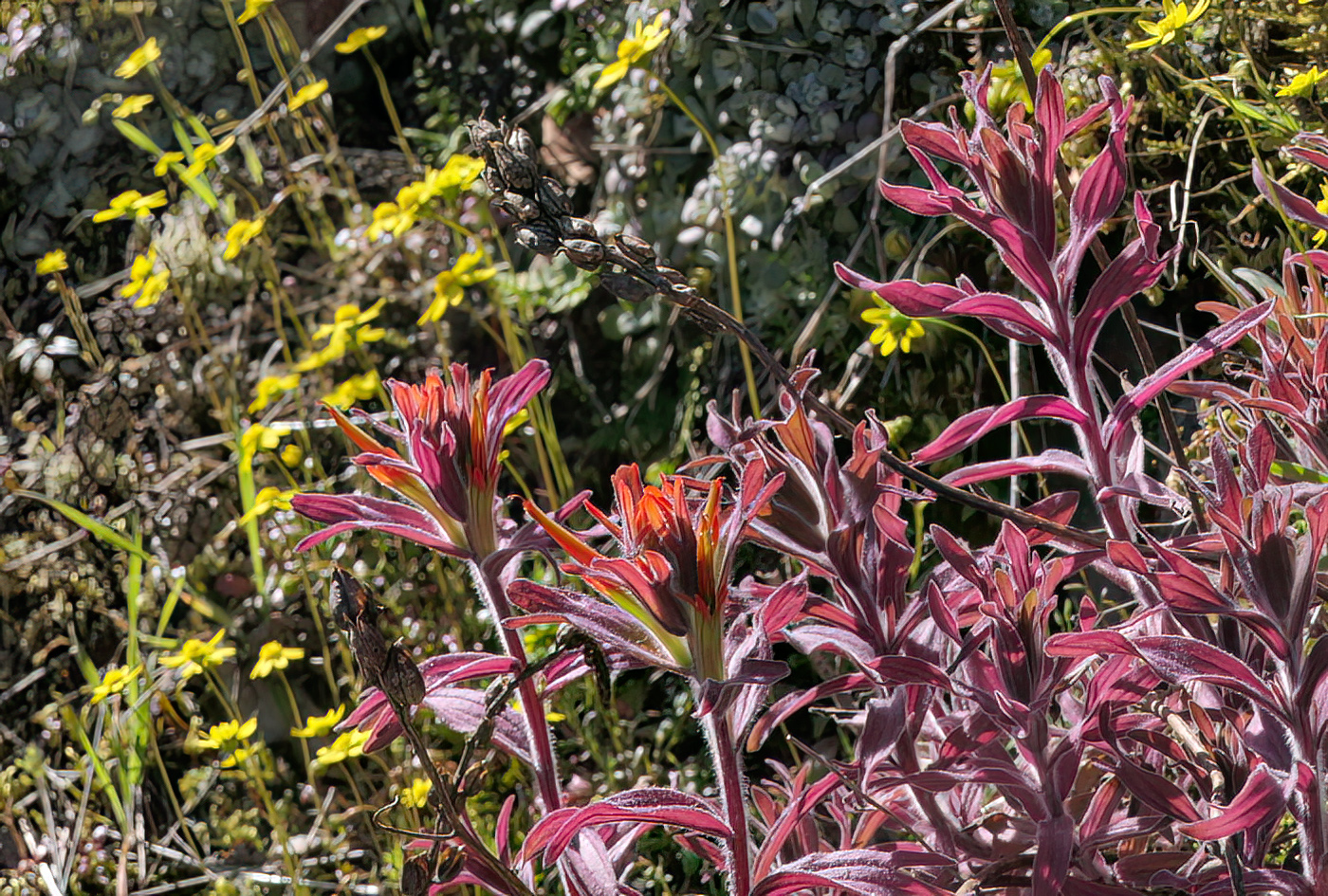
A single harsh paintbrush (Castilleja hispida) plant was coming into bloom along the reservoir cliffs, with gold stars blooming nearby.
The forecast for March 7th was partly sunny and above 60°. While I’d seen one butterfly and some early flowers at home, I was anxious to get out to see many more, so I decided to put my work aside and head out Road 21 along Hills Creek Reservoir and through the Rigdon area for my annual season-opening trip. My usual early flower friends were all out, gold stars (Crocidium multicaule) being the standout, as usual. The Sierra gooseberry (Ribes roezlii) was just beginning to flower, and the Hall’s lomatium (Lomatium hallii) was also getting started. The clouds were breaking up, and I passed several California tortoiseshells as I drove along the reservoir, so it was really starting to seem like spring.
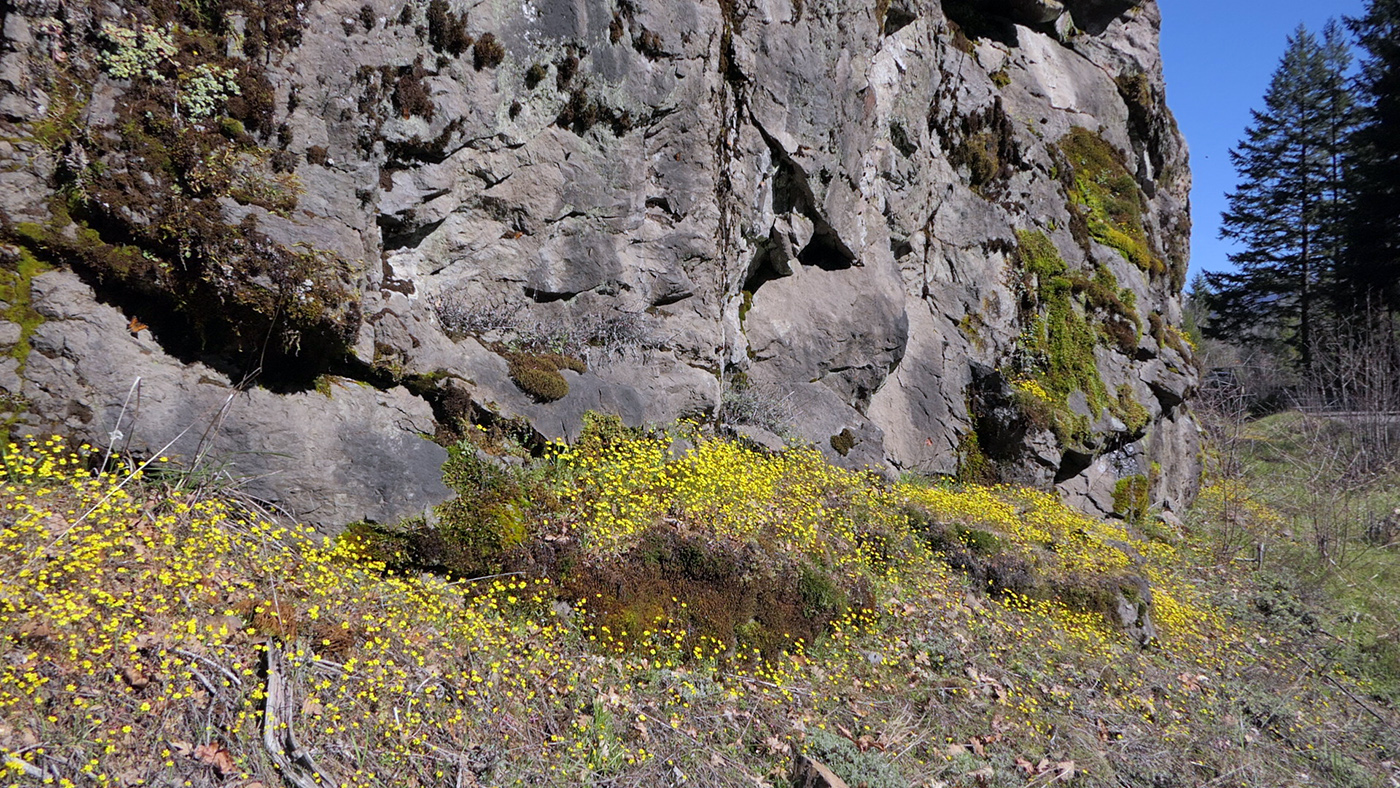
The gold stars were beautiful at the base and on top of “Ladybug Rock,” just 6/10 of a mile before Camper’s Flat campground. This is the biggest gathering place of California tortoiseshells on warm sunny days in March.
After my usual stops along the cliffs at the reservoir between mileposts 7 and 10, I stopped for lunch at Everage Flat. Last year, Kate Shapiro joined me for my first trip of 2025 (which I apparently never blogged about). While at Everage Flat, we spent quite a while removing Scotch broom (Cytisus scoparius), which was threatening to take over the wooded area at the north end. This is where there is a good-sized population of long-spurred piperia (Platanthera elongata). I was relieved to find less than a dozen Scotch broom still there, and I quickly dispatched those. The Forest Service is so understaffed and underfunded—especially for botany work—that volunteer effort is going to be needed to keep weeds under control. The skunk cabbage (Lysichiton americanus) wasn’t even up yet, but I checked on the single plant of straggly gooseberry (Ribes divaricatum), and was happy to see a healthy branch, though with no flowers yet. The large Scouler’s willow (Salix scouleriana) was in full bloom by the road with lots of fly activity, but the few California tortoiseshells showed no interest in it.
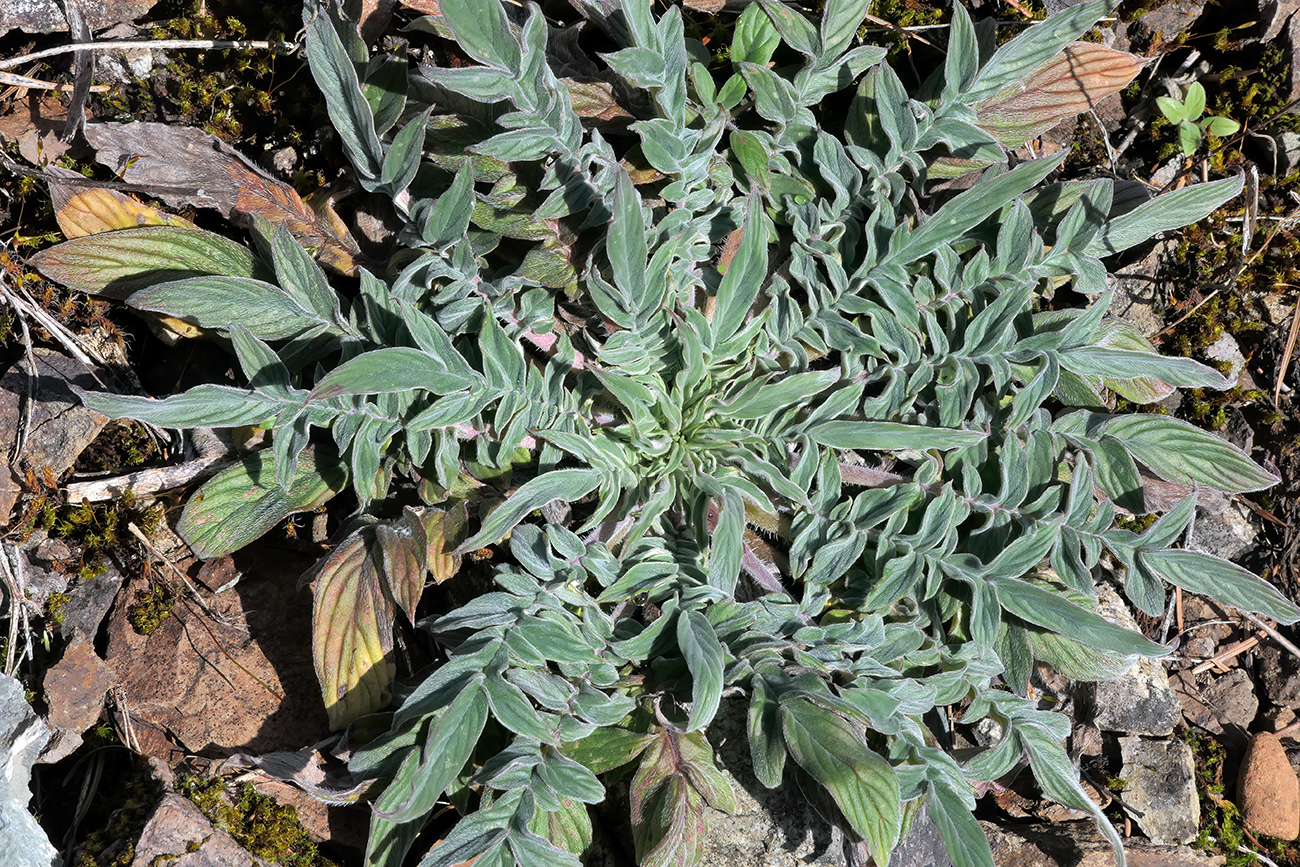
The second year rosettes of varileaf phacelia (Phacelia heterophylla ssp. virgata) are quite beautiful before they send up the flowering stalk. These grow profusely along Road 21 at the north end of the reservoir as well as in one spot along the west side.
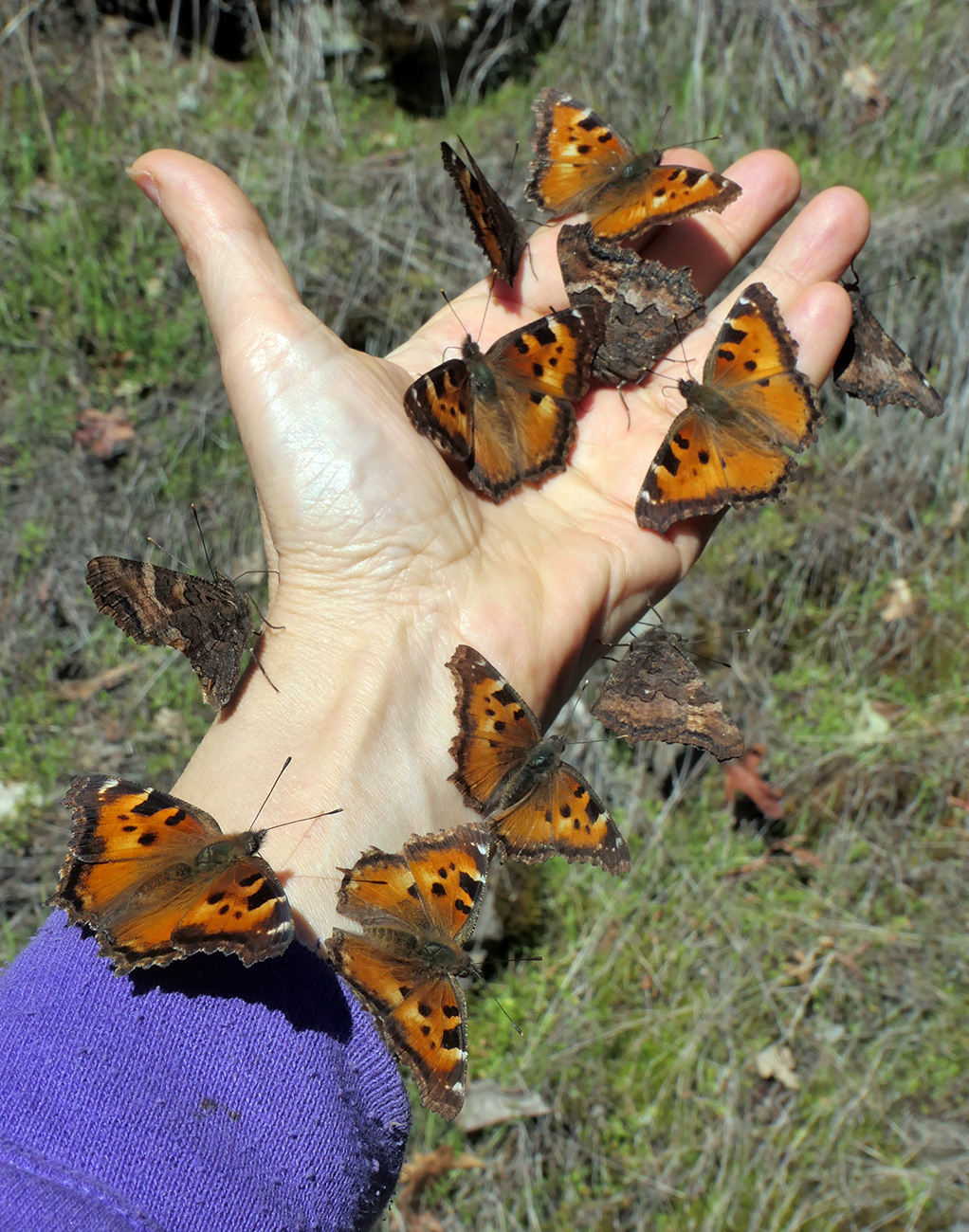
This was a new record for me—11 California tortoiseshells at once. There were also several alighting on my pants and my camera bag. Once one lands, everyone else wants to see what the fuss is about.
The highlight of the day had to be checking out the tortoiseshell gathering on “Ladybug Rock”. They rarely disappoint me on my first trip out. There were probably about 50 fluttering around on the sunny rock face. Only one little echo azure was also out, nectaring on gold stars. A little bit farther up the road, there’s a small creek that runs over the road bank. For some reason, that’s where I get the most attention from the butterflies. I spent almost half an hour “collecting” butterflies on my sweaty hand. I beat my previous record of 9 butterflies on one hand that I set in 2022 (see 2022 Botanizing and Butterflying Season has Begun!). I could try for two hands next year—but then I wouldn’t being able to photograph them!
My next stop was Camper’s Flat to check out the blooming white alders (Alnus rhombifolia) along the Middle Fork of the Willamette River. I also climbed up to the opening on the other side of the road to see the tiny-flowered meadow nemophila (Nemophila peduculata) and was very happy to see the first flowers of chickweed monkeyflower (Erythranthe alsinoides). I’ve spent the last few months working on a treatment for Phrymaceae for the Flora of Oregon, Volume 3. I’ve looked at lots of specimens of monkeyflowers online and in the OSU Herbarium as well as my photos and those on iNaturalist and elsewhere, but I was really looking forward to seeing living plants again. Their flowers are so delicate, they just don’t press well, and many of the important features can’t be seen well in photos either. It’s also really hard to see the vestiture—the hairs that cover the herbage and are often present in the flowers. There’s just no substitute for seeing the plants in the wild.
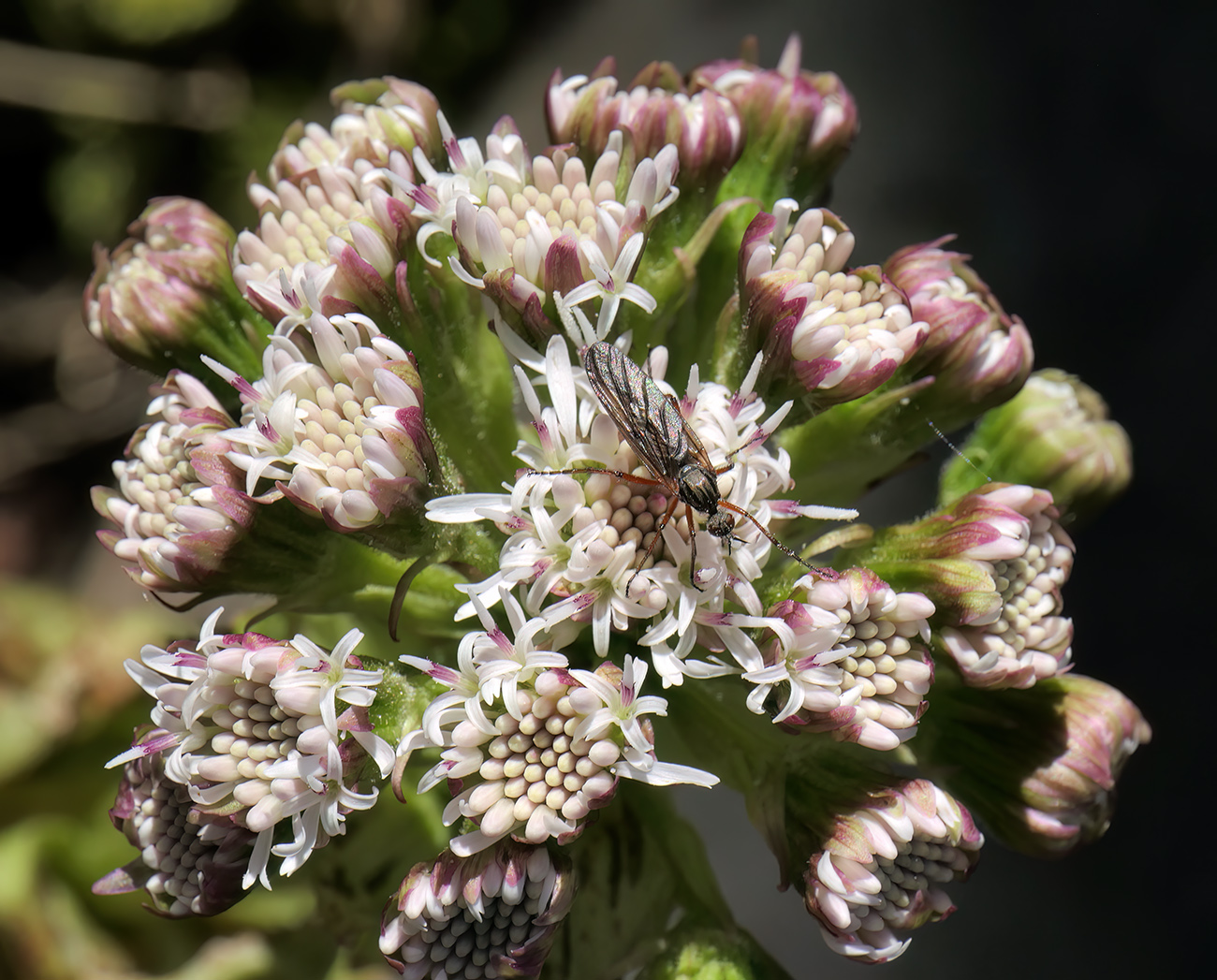
Most of the pollinators I saw were flies, like this one on a fresh sweet coltsfoot (Petasites frigidus).
That was all pleasant botanizing and butterfly watching, but now it was time for the task I wasn’t exactly looking forward to. Last August, the Emigrant Fire was started by lightning and burned across an area over 33,000 acres south of Road 21, east of Staley Creek Road 2134, and much of the way up to the Calapooya Crest. I hadn’t been in the area since and was afraid of what I might find. Someone recently told me that the forest around Grassy Glade was devastated. I wasn’t sure if I could stand to see it yet, so I decided to head to Sacandaga Campground first, as it is right next to the northern end of the fire, and I hoped it would have been protected. There was no sign of burned trees all the way to the campground—yay! Rigdon Meadow was surrounded by green trees. I could see a desolate ridge to the east and was puzzled. Wasn’t that already burned in the Tumblebug Fire back in 2009? But then why is it still completely dead 16 years later? I had forgotten that most of the Emigrant Fire was actually in the footprint of the previous fire—the heavy fuel load of dead wood and brushy regrowth had fueled the explosive spread of the fire.
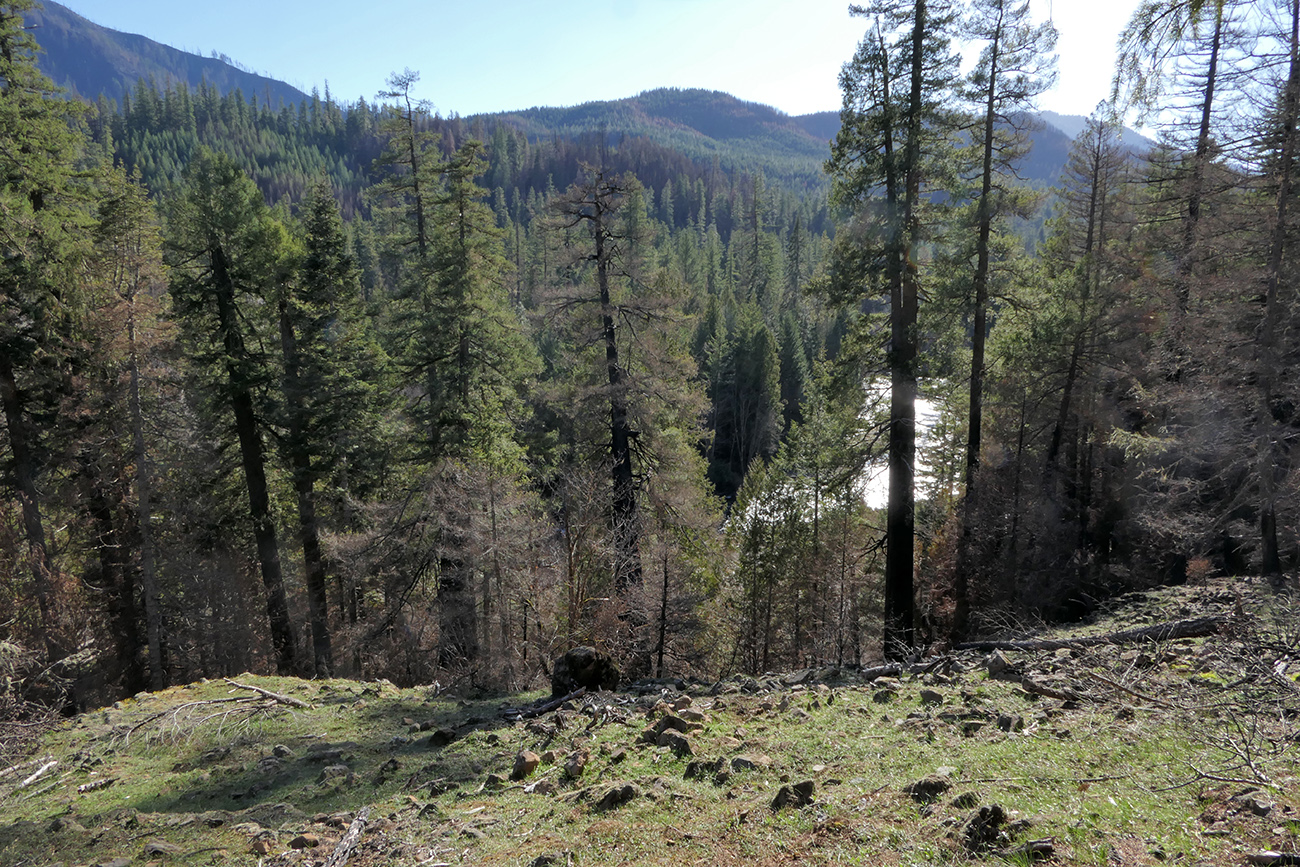
The view southwest across the Middle Fork of the Willamette River reveals only patchy burned forest at the north end of last year’s Emigrant Fire.
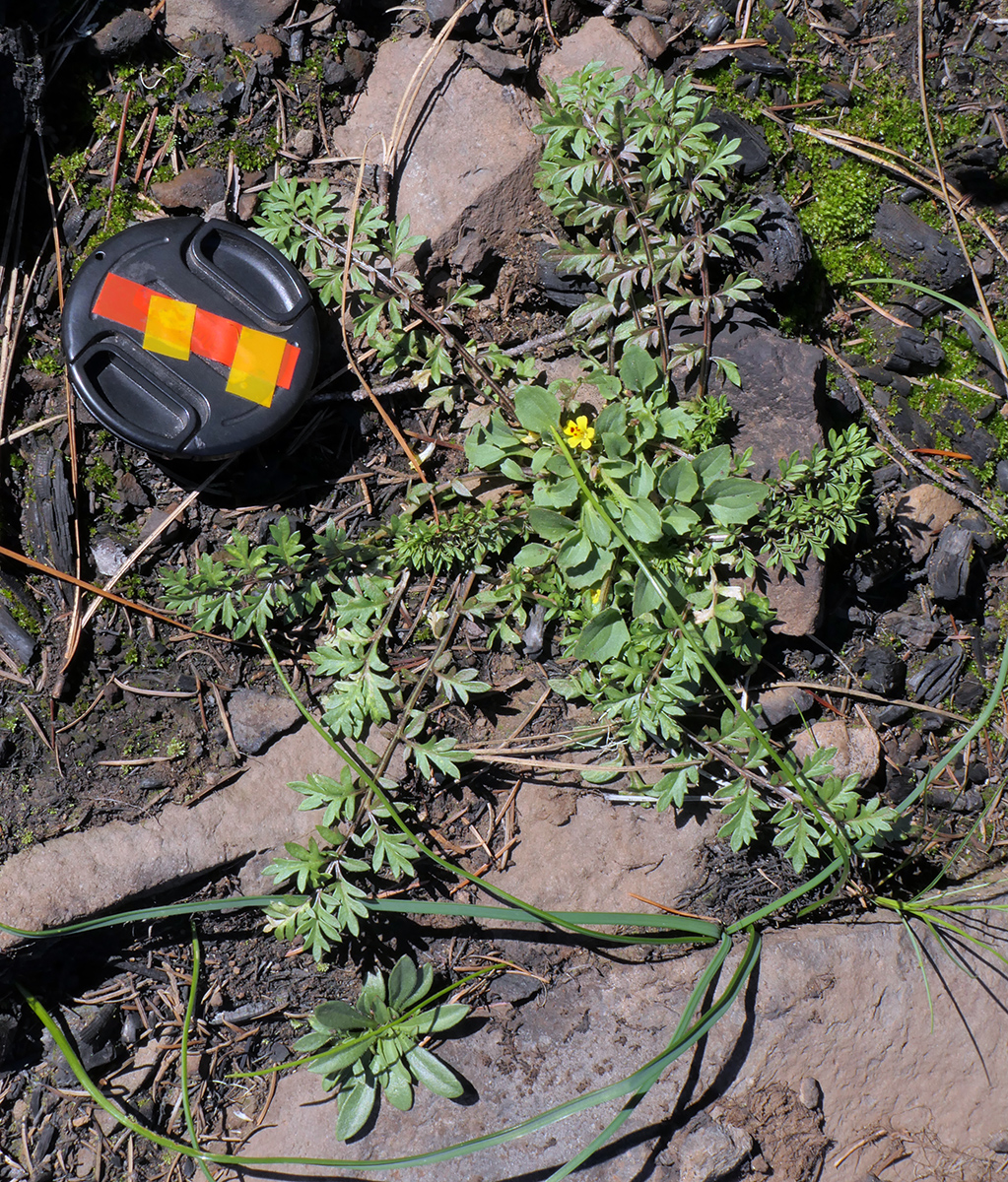
While most of the Sacandaga Campground was unscathed, Sacandaga Bluff was burned. The annuals and bulbs seemed to benefit from it. This seedling bluefield gilia (Gilia capitata) was probably three times bigger than any I have growing at home. There were lots of chickweed monkeyflowers as well.
When I climbed up the south end of the campground to “Sacandaga Bluff,” I was dismayed to finally see signs of fire. I had hoped to see all the early pollinators that enjoy the large manzanitas up there, but the manzanitas appeared to have been cut and strewn about. The fallen logs were burned black, and the standing trees were alive but charred at the base. Looking south across the river, most of the forest was green with only patchy brown areas, so it seems unlikely the fire crossed the river. I guessed the firefighters must have lit a backburn to protect the campground. A call to the Middle Fork Forest Service office this morning confirmed this. I looked around for signs of the rare Sierra cliff brake (Pellaea brachyptera) but couldn’t locate it. I hope that the fire was light enough to take out last year’s dead fronds without killing the plants, but I won’t know for a while. There was also no sign of the many-stemmed sedge (Carex multicaulis), also at the northern end of its range. On the other hand, the annuals and bulbs seemed to be coming up profusely, likely a little extra carbon stimulating their growth.
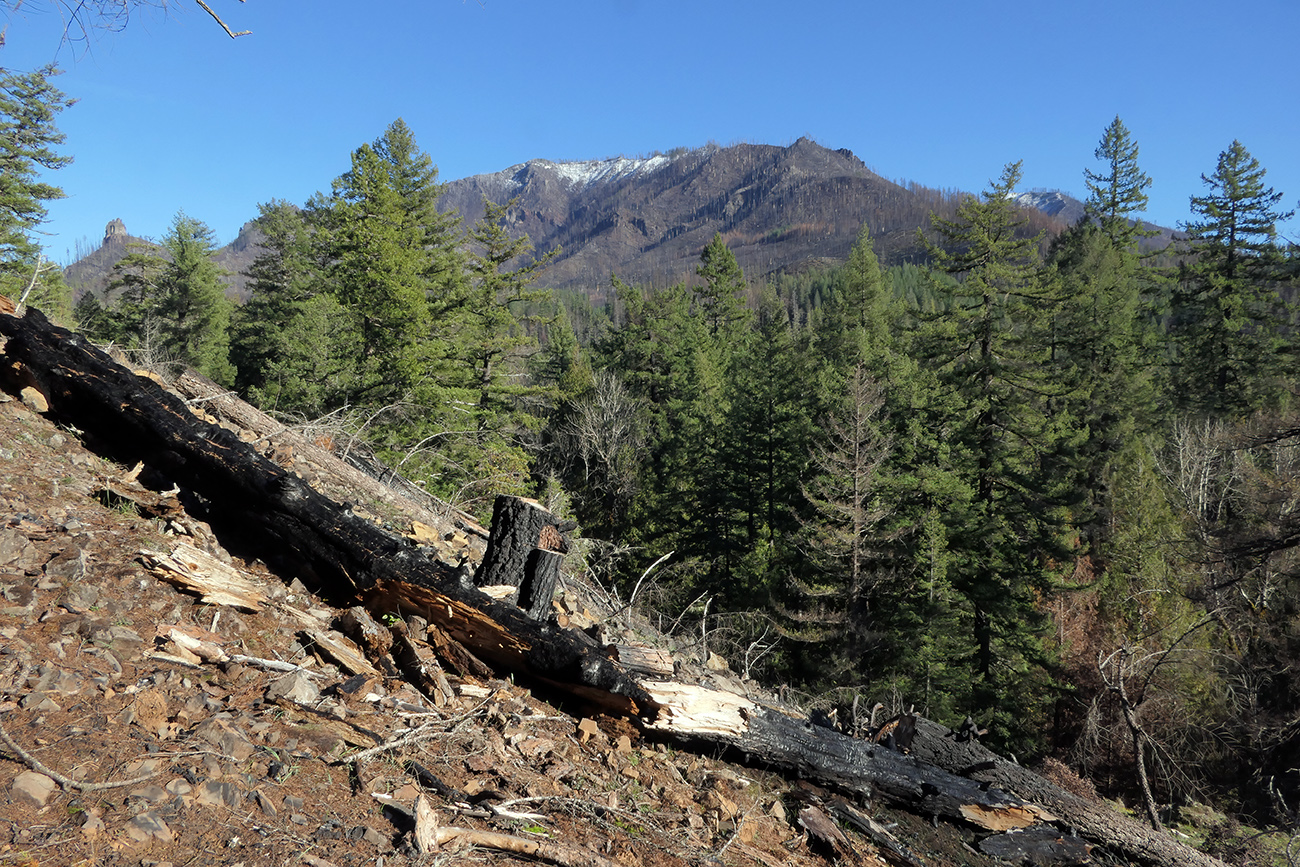
From Sacandaga Bluff, you can see the Tumblebug Fire scar now reburned. It doesn’t look that different than it did 5 years ago (see On the Menu at the Butterfly Café) except the pocket of green that escaped the 2009 fire is mostly gone now. Note also how much less snow is on the ridge than in 2021 at the end of March.
Relieved that the fire damage there was not as bad as I thought, I headed up Staley Creek Road to take a look at the Staley Creek Gorge. No signs warning of closures or dead trees—that’s promising. No sign of burned trees. I started getting hopeful the area was spared. I was able to let some of my trepidation go as I arrived at the bridge across Staley Creek. There was a small burned area to the left of the far side of the bridge, but it was the least interesting area botanically. Whew! I didn’t have time to head all the way up to Grassy Glade (and I’ve now found out that the road is actually closed, though there were no signs), but I did drive up Road 2137 a tenth of a mile to inspect the small roadcut openings that are so floriferous in the spring. Much of the meadow area was fine with lots of gold stars in bloom and other species just emerging, but there was no sign of the perennial Howell’s pussytoes (Antennaria howellii), and the woods above were largely burned. This is the lowest elevation that I’ve seen this uncommon species. Perhaps it will come back from seed. All in all, I’m relieved that the area is not as damaged as I’d been imagining all winter. Hopefully, this summer won’t be too bad, but I’m bracing myself for more fires in the future.
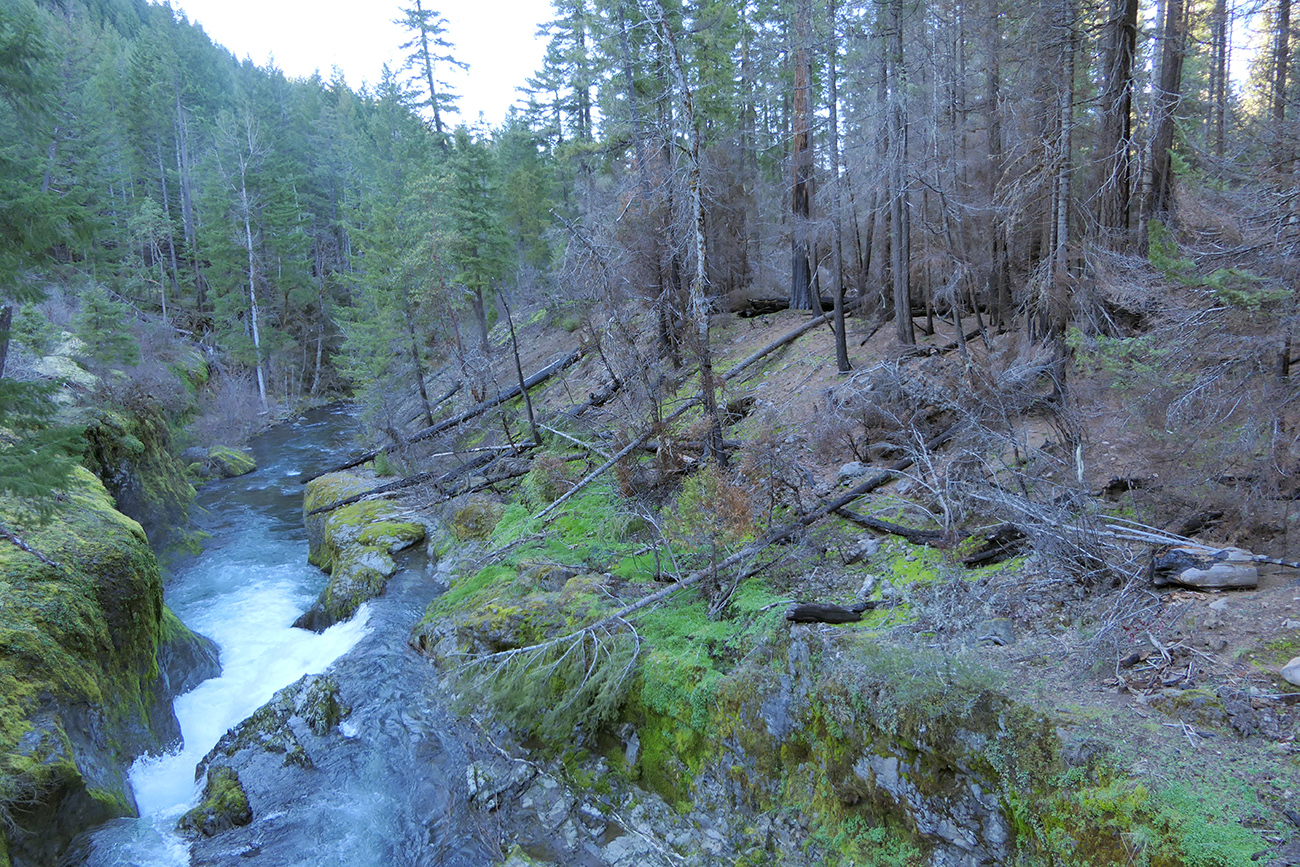
Only a small area on the northeast side of the Staley Creek Bridge was burned. I had worried that the lovely Pacific yews (Taxus brevifolia) in the primitive camping area on the south side of the bridge were gone, but thankfully they were untouched.

This little meadow above the roadcut on Road 2137 did get burned. The largest dead tree in the middle of the photo was an impressive sugar pine. I’m very sad to lose that one.
Oh ouch, Tanya. This is sobering in some of the upper reaches of Rigdon. If the cliff brake’s rhizome wasn’t too toasted, it may indeed come back. Sacandaga was such a cool spot, I hope it all comes back.
This blog is a KEEPER…great for future references here!!! I was transplanting a bit of Crocidium multicaule to our garden as it grows at the base of our cliffs going up hill..Always so cheerful and harbinger of Spring…Great blog!!!The Tortoise shells!! OH MY…we have them dancing through the garden…but not in that quantity!! Oh My!! You always amaze me!! THIS IS A KEEPER!!!
I learn something new everytime you send thse wonderful blogs!!! I attended KS WILD’s yearly MOVIE night with about 400 guests last night, and Turtles were a part of the offering…as well as salamanders and Yosemite Toads!!! Fabulous Event!!!THERE IS HOPE!!!! As long as we have people that care…anf join us with our LOVE for NATURE we have a chance!!! I met a man ( Paul Sheldon…who knows Michael Parker…TURTLE MAN!!! ) and that’s hopefullly going to lead me into a direction where we can help… I’ll still endeavor in other places too.. I’m so sad that my education has been as limited as it has,,,Still striving… many hugs to you!!! THANK YOU!!!